
Choosing Drill Steel and Rock Drill Bits
The drill breaks the rock, but the steel and the bit decide how fast, how deep, and how often you stop to change parts. Match the shank to your drill, the thread to your work, and the bit face to your rock – in that order.
Every handheld pneumatic rock drill is one half of a system. The other half – the drill steel and the bit – is a consumable, and choosing it wrong costs you in three ways at once: slower penetration, shorter component life, and stuck strings. This guide walks the same two steps our product experts walk on the phone: first identify the shank configuration your drill accepts, then pick the steel-and-bit system that fits your holes and your rock.
The short version
Start by identifying your drill’s shank: 7/8 x 3-1/4 in, 7/8 x 4-1/4 in, or 1 x 4-1/4 in hex. Then pick your path below – and pick the bit face for your rock last.
Whirlibit (one-piece)
5/8 to 1 in holes up to about 26 in deep – bit and steel in a single piece for light drills.
See Whirly Bits >H Thread Steel + Bit
The contractor standard for 1-3/8 to 3 in holes – carbide cross for all-around work, button for hard rock.
See H Thread >Rope Thread (R25 / R32)
Carburized steel and extension strings for 2-1/2 in+ holes, deep holes, and demanding ground.
See Rope Thread >Determine the Shank Configuration on Your Drill
You must know your shank before you order a single piece of steel. The shank is the end of the drill steel that fits into the drill’s chuck and takes the piston’s blow. It has to match the chuck exactly – a mismatched shank batters, mushrooms, and takes the chuck bushing and piston with it.
The measurements are simple. A shank is described by two numbers: the diameter of the hex steel measured across the flats, and the length above the retaining collar. On handheld drills there are only three common configurations: 7/8 x 3-1/4 in, 7/8 x 4-1/4 in, and 1 x 4-1/4 in.
Weight class suggests – it does not guarantee. Larger sinker drills usually run the larger steel, but it is not uncommon to find a 55 lb class drill set up for a 7/8 x 3-1/4 in shank. Measure, or check your drill’s manual, before ordering. The smallest common pneumatic drills – variations of the CP9 class – skip separate steel entirely and run a one-piece bit-and-steel combination called a Whirlibit, covered next.
Before you go to step two
- ✓Measure the hex across the flats: 7/8 in or 1 in.
- ✓Measure from the top of the retaining collar to the end of the shank: 3-1/4 in or 4-1/4 in.
- ✓Not sure? Call 1-888-883-5144 with your drill’s make and model – we can identify the shank for you.
Carbide Tipped Whirly Bits
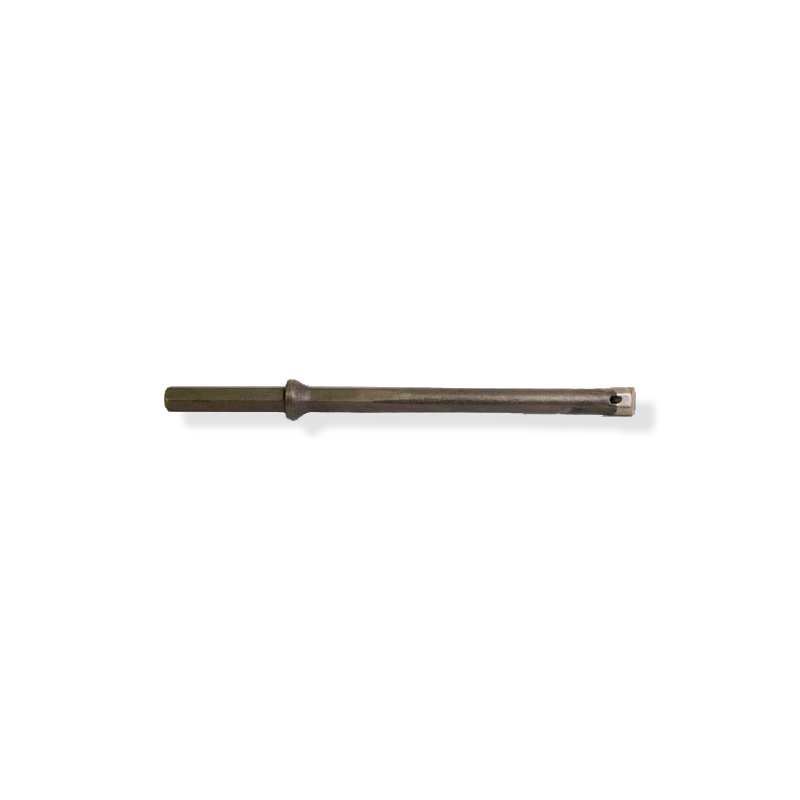
What it is. A Whirly Bit is the bit and the drill steel in one piece: the shank that goes into the drill, the body of the steel, and a silver brazed carbide tip. The body is deliberately smaller in diameter than the bit so cuttings can travel up and out of the hole as you drill.
Where it shines. Small holes, fast. Whirly Bits typically drill 5/8 to 1 in diameter holes up to 26 in deep (larger and smaller diameters and depths may be available), and even a 1 in shanked, 60 lb class drill can be used to drill a hole smaller than 1 in to a limited depth – something a separate steel-and-bit system cannot do.
The trade-off is the geometry. Because the steel body shrinks with the bit size, column strength shrinks with it. One-piece steels will not tolerate off-line drilling, especially under larger drills – keep the string straight and never side-load it.
Pros
- ✓Small holes (typically 5/8 to 1 in diameter, up to 26 in deep) drilled quickly with pneumatic drills.
- ✓One piece to buy, carry, and chuck – no threads to grease or joints to work loose.
- ✓Lets even a 60 lb class drill drill holes smaller than 1 in, to a limited depth.
Cons
- ✗Costs more than a separate steel and bit.
- ✗Steel size decreases with bit size – so column strength decreases too. They will not tolerate off-line drilling, especially with larger drills.
- ✗Tips are not replaceable: when the bit is worn, the entire steel is retired.
H Thread Steel and Bits
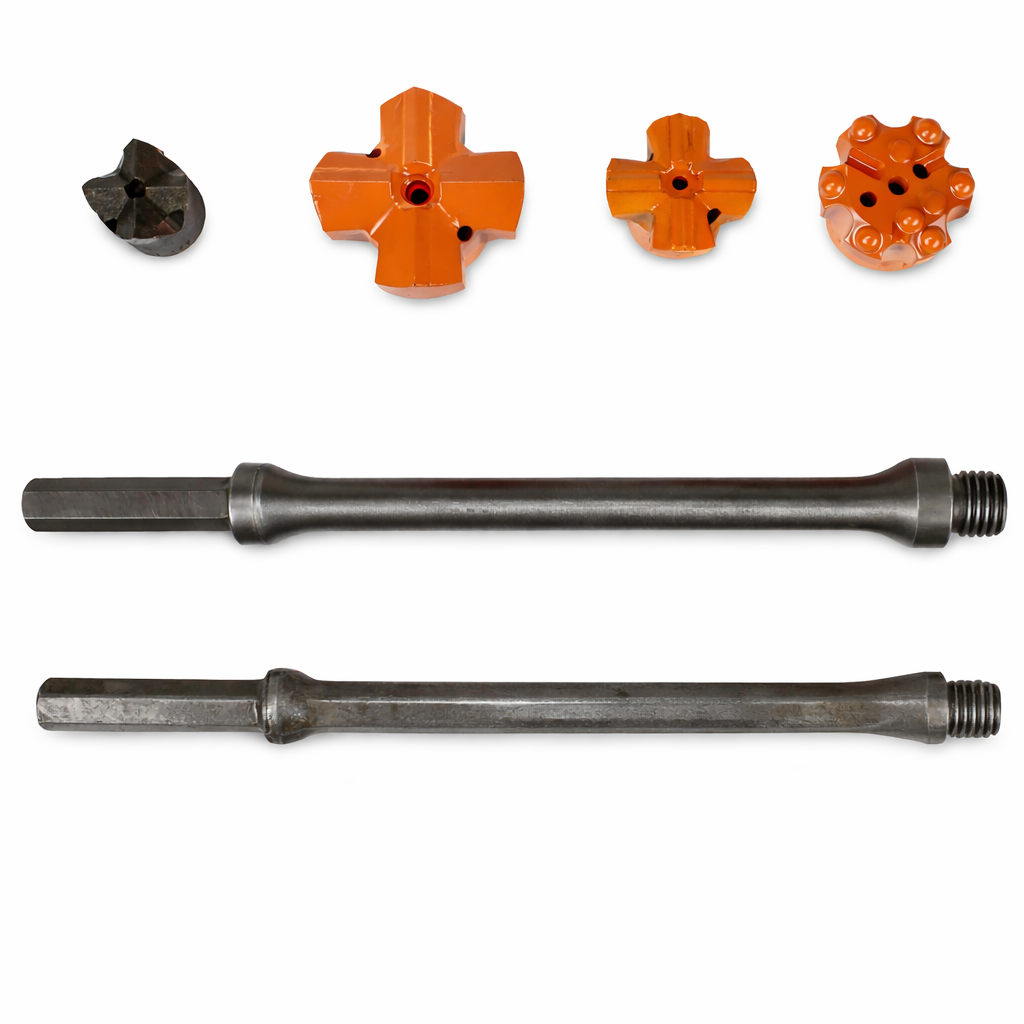
What it is. H thread is probably the most commonly used contractor’s thread, thanks to its versatility and availability. The male thread on the steel is about 1 in in diameter and about 3/4 in long. We typically stock H thread steel from 12 to 120 in long, in all three shank configurations.
How it is made. H thread drill steel is usually a high carbon steel – forged, machined, and heat treated to carry a wear-resistant exterior over a slightly softer core that can handle and transfer impact energy.
How it drives. It is a shoulder drive steel: the skirt of the bit tightens up against the forged and machined shoulder on the steel, and the percussive energy passes through the steel and the skirt of the bit to the face, shattering the material in front of it.
Its one weakness – and how to manage it. The shoulder drive dictates that the bit must stay tight against the shoulder. If it works loose, all of the drill’s force runs through the very small threads on the bit and steel, and they will quickly fail. Keep constant down pressure, never let the drill bounce in the hole, and H thread will work very well in most hard rock drilling applications. (Feed technique is covered in depth in Tips for Efficient Drilling.)
Thread dimensions at a glance
| Thread | A | B | C | Thread pitch per inch |
|---|---|---|---|---|
| H | 1 in | 1-3/8 in | 3/4 in | 6 |
| D | 1-3/16 in | 1-5/8 in | 7/8 in | 5 |
| E | 5/8 in | 7/8 in | 1/2 in | 6 |
Bit ranges available on H thread steel
| Bit style | Diameter range | Notes |
|---|---|---|
| Full carbide cross | 1-3/8 – 3 in | The most common choice; four large brazed carbide inserts |
| Shallow carbide cross | 1-3/8 – 2 in | Lower-cost carbide option for lighter duty |
| Button bit | 1-3/8 – 2-1/4 in | Multiple carbide buttons pressed into the face |
| All steel | 1-3/8 – 2-5/8 in | No carbide; lowest cost per bit |
Choose H thread when
- ✓You are drilling typical contractor holes – anchors, blast holes, dowels – in the 1-3/8 to 3 in range.
- ✓You want steel and bits that are stocked, available, and interchangeable across all three handheld shank configurations.
- ✓Your operators hold steady feed – shoulder drive rewards constant down pressure.
Choosing the Bit Face for Your Rock
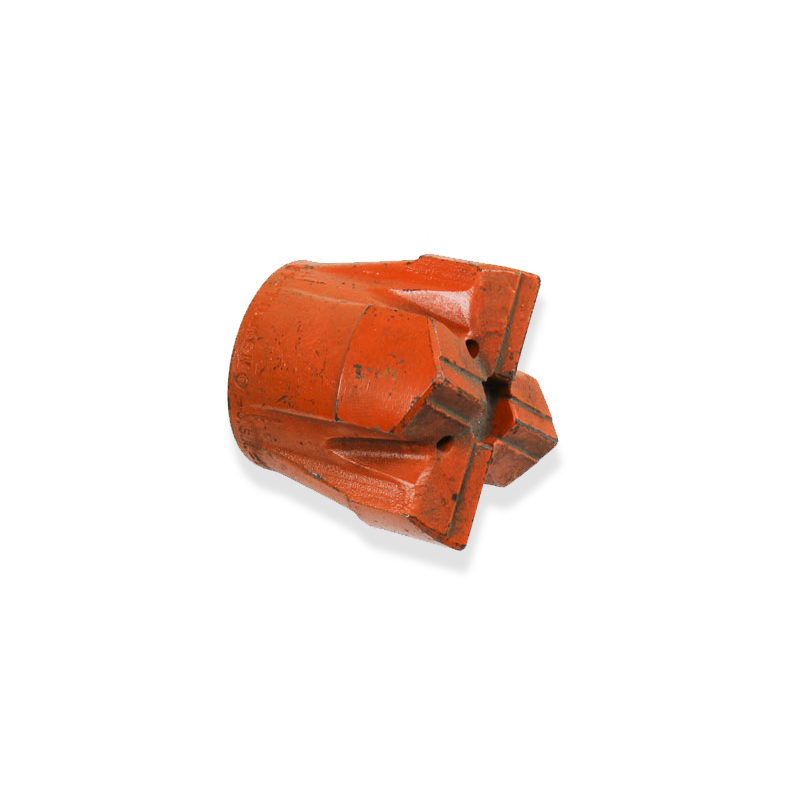
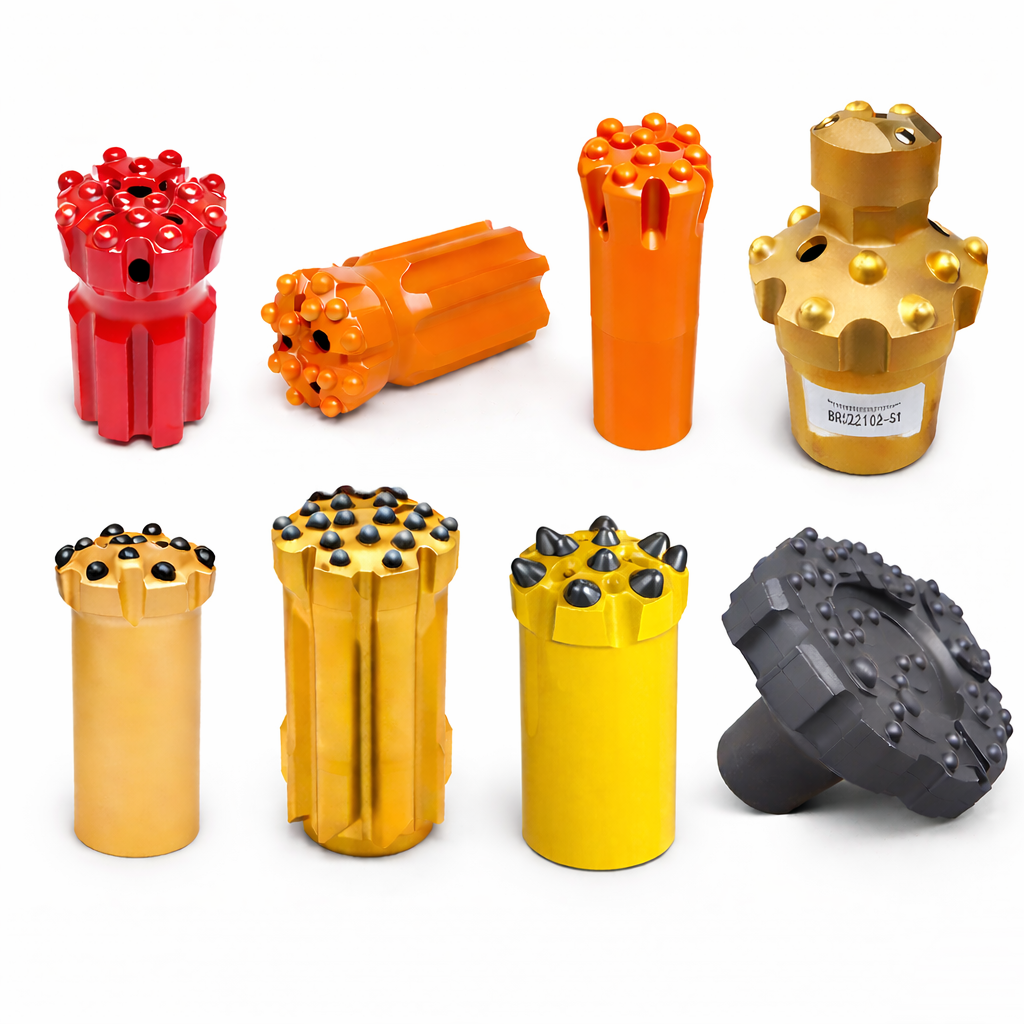
Standard or full carbide cross bits carry four large silver brazed carbide inserts that hold up extremely well in production hard rock drilling. They hold their gauge well, they are forgiving in broken ground, and when they finally dull, they can be sharpened and put back to work instead of retired.
Carbide button bits cost a little more than a full carbide cross bit and carry multiple carbide buttons pressed into the face. They can look dull and ineffective at first glance – but remember how a percussive rock drill works. Larger hand drills deliver enough impact energy to make button bits far superior to a cross bit in both speed and longevity in the right conditions: hard rock, a drill with real blow energy, and clean flushing.
All steel bits skip the carbide entirely. They are the lowest-cost way to put holes in softer, less abrasive material, at the price of much shorter face life.
One caution from the field: button faces smear and plug in sticky clay seams – in that ground, a cross or steel bit clears itself better. And whichever face you run, follow a worn bit with a smaller one in deep holes: a new full-gauge bit sent down an undergauge hole is the classic stuck string. (More on chasing bits in Tips for Efficient Drilling.)
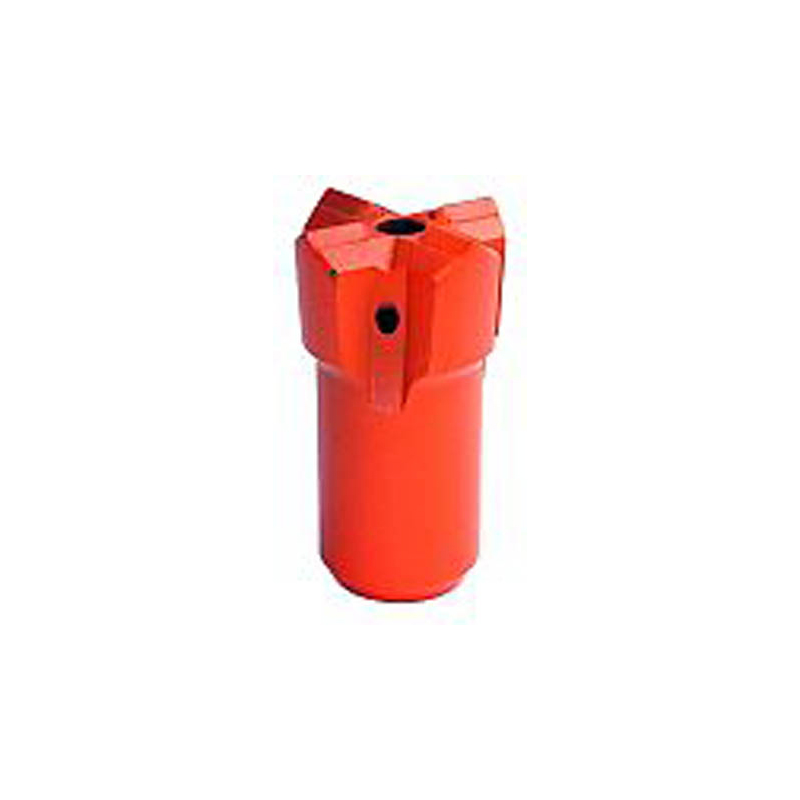
Full Carbide Cross
The all-around choice for production hard rock. Holds gauge, tolerates broken ground, and resharpens when dull. Available 1-3/8 to 3 in.
Carbide Button
You run a larger hand drill in hard rock and want maximum speed and bit life. Costs a little more; avoid sticky clay seams. Available 1-3/8 to 2-1/4 in.
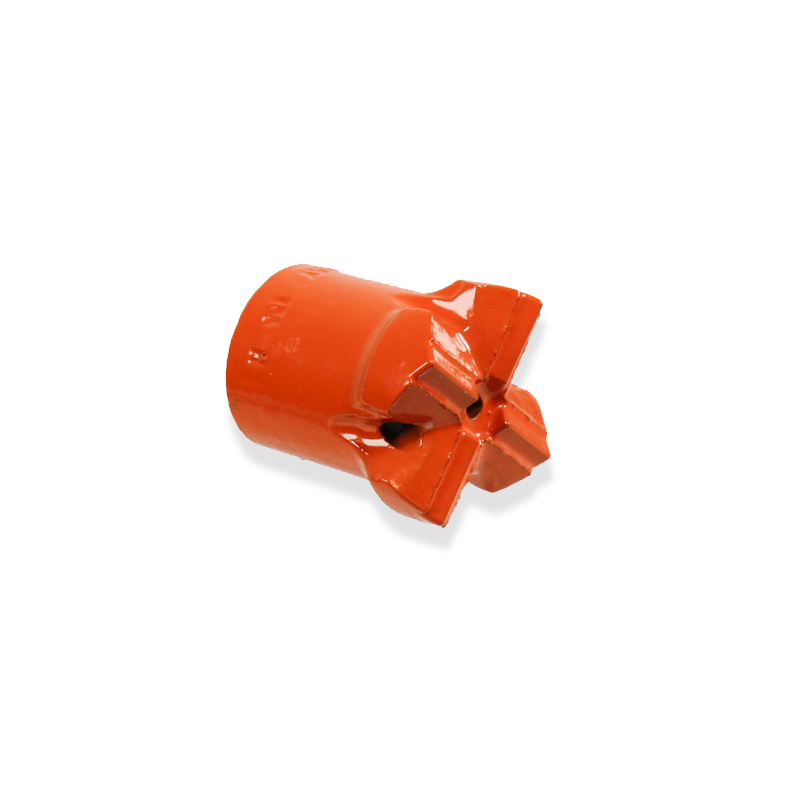
Shallow Insert Cross
Lighter-duty carbide performance at a lower price point. Available 1-3/8 to 2 in.
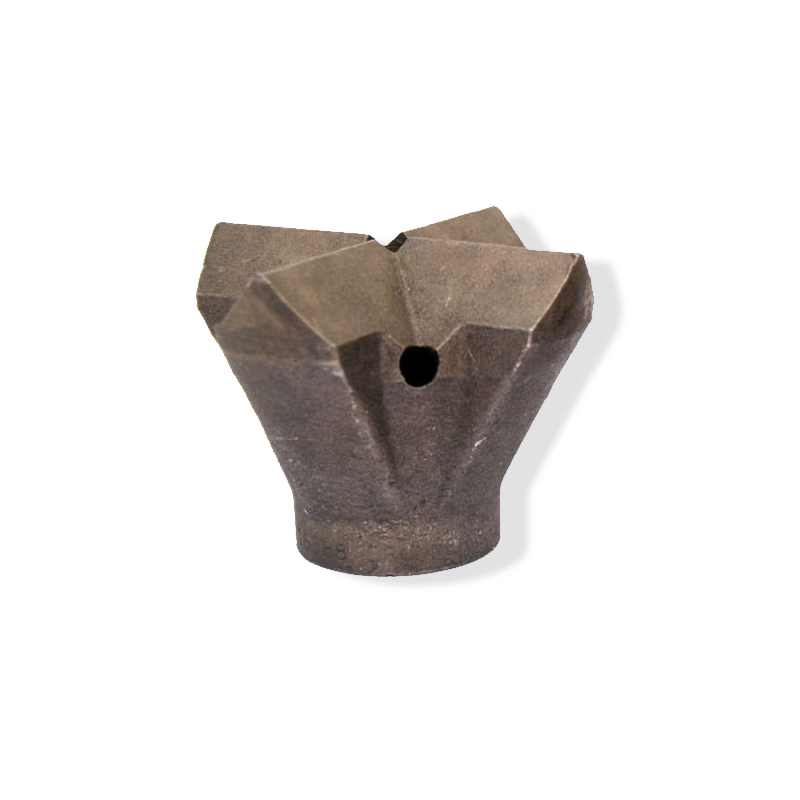
All Steel
Softer material, tight budgets, or short jobs where bit life matters less than bit cost. Available 1-3/8 to 2-5/8 in.
Rope Threaded Steel and Bits (R25 / R32)
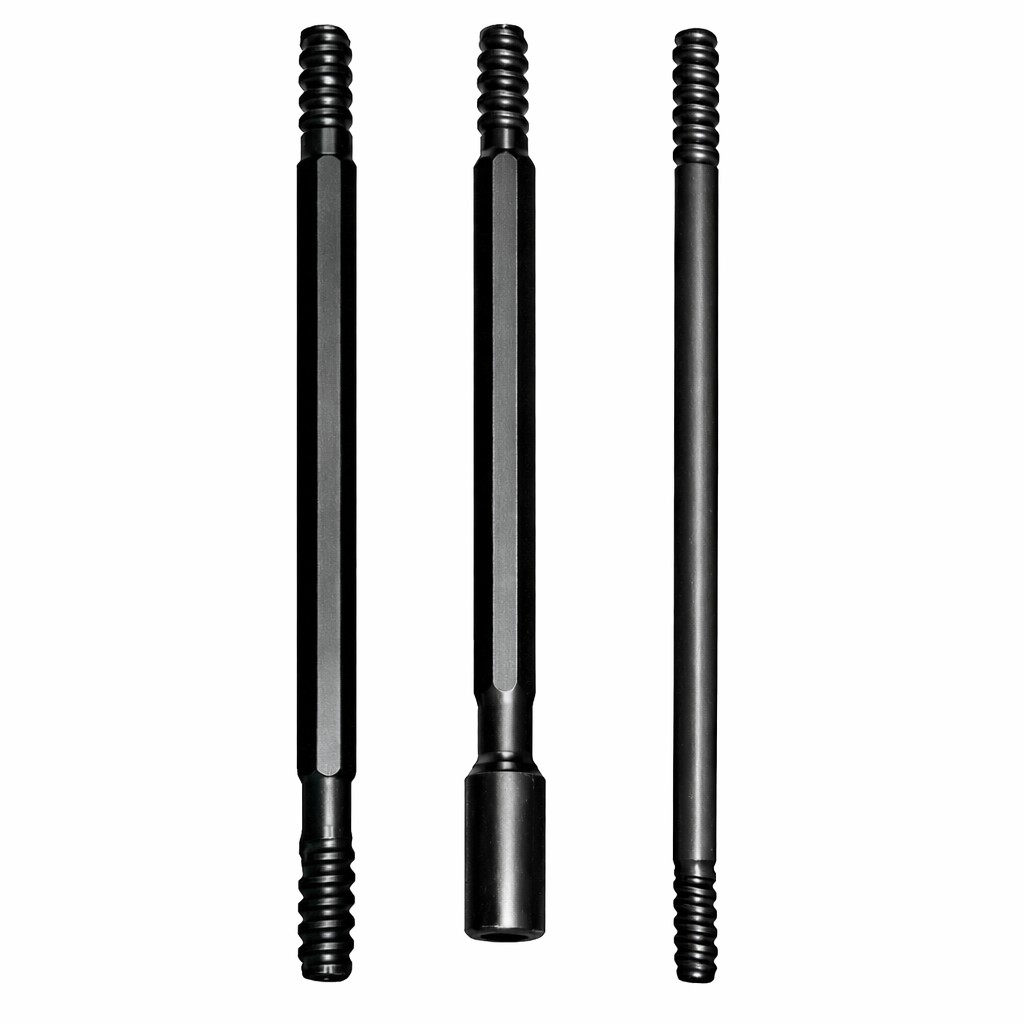
What it is. 100 rope (1 in rope, R25) and 125 rope (1-1/4 in rope, R32) steel are used extensively in underground production mining – and many contractors have moved to them for longer life in demanding conditions, or when consistently drilling 2-1/2 in and larger holes.
Why it lasts. The steel is normally carburized – infused with carbon in a furnace – which gives it an extremely hard casing over a lower-hardness core that transfers the impact shockwave. The thread itself is larger and longer than a contractor thread and bottoms out inside the rock bit, so the joint is far more forgiving in tough drilling conditions than a shoulder-drive connection.
Why it scales. Rope thread gives you the ability to run drill strings with extension steels – drill a deeper hole, or drill long holes from confined spaces where a single full-length steel will not fit. Crowder Supply also manufactures a large variety of steel and bit adaptors for larger track drills, but with hand drills it is seldom necessary to move beyond these two threads.
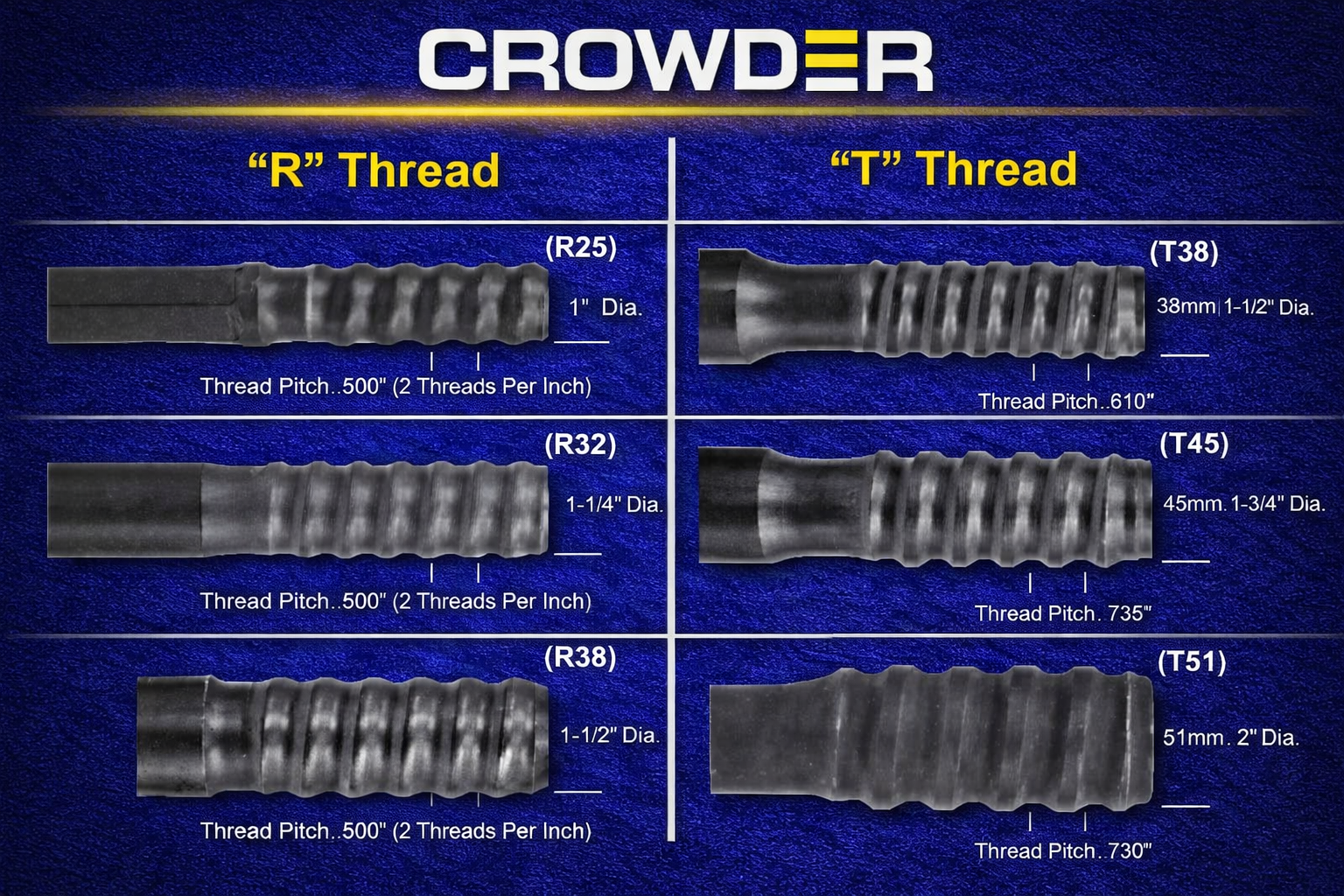
Choose rope thread when
- ✓You consistently drill 2-1/2 in diameter and larger holes.
- ✓You need depth or reach beyond a single steel – extension strings with couplings.
- ✓You are drilling underground or in demanding conditions where thread life pays for itself.
Compare the Three Systems
Match the system to your holes first, then pick the bit face for your rock.
| Whirly Bit (one-piece) | H Thread steel + bitMost common | Rope Thread (R25 / R32) | |
|---|---|---|---|
| Typical hole diameter | 5/8 – 1 in | 1-3/8 – 3 in | Best value at 2-1/2 in and up |
| Depth | Up to about 26 in | Single steels stocked 12 – 120 in | Extension strings for deep or long holes |
| Drive style | One piece – no joint | Shoulder drive; bit must stay tight to the shoulder | Thread bottoms out in the bit; more forgiving |
| Steel construction | Body forged smaller than the bit for flushing | High carbon steel; forged, machined, heat treated | Carburized – hard case, impact-transferring core |
| Bit replacement | Not replaceable; retire the whole steel | Threaded bits: cross, button, shallow insert, all steel | Threaded bits; adaptors available for track drills |
| Typical user | Light drills (CP9 class) making small holes fast | Contractors – the most common system | Underground mining; contractors in demanding ground |
Get the Details Right – They Decide How Long the String Lives
The right steel and bit still fail early if the details around them are wrong. These habits protect the parts you are about to buy.
Shank first, always
Every order starts with the shank configuration: 7/8 x 3-1/4, 7/8 x 4-1/4, or 1 x 4-1/4 in. Nothing else fits if this is wrong.
Step bits down, never up
Bits cut a slightly smaller hole as they wear. In deep holes, follow a worn bit with a smaller one – a new full-gauge bit in an undergauge hole jams and breaks.
Grease every make-up
Thread grease on every joint – rod to coupling, bit to steel – prevents galling and is credited with extending rod life on the order of 30 percent.
Pair new with new
Run new bits on new steel where you can. A new bit on worn threads – or a worn bit on new steel – chews up the fresh part fast.
Protect the carbide
Carbide chips when bits rattle against each other. Keep bits in their containers, and rack steel off the ground with the threads protected.
Hold the feed
Shoulder-drive steel is engineered around constant down pressure. A bouncing drill sends the blow through the small threads – and strips them.
Frequently Asked Questions
How do I know which shank my drill takes?+
Measure the hex of a steel that fits it: the diameter across the flats (7/8 or 1 in) and the length above the retaining collar (3-1/4 or 4-1/4 in). The three common handheld configurations are 7/8 x 3-1/4, 7/8 x 4-1/4, and 1 x 4-1/4 in. Drill weight class only suggests the shank – a 55 lb drill can be set up for the smaller 7/8 x 3-1/4 in shank – so measure or check the manual before ordering.
Cross bit or button bit – which is better?+
Cross bits are the all-around choice: four large brazed carbide inserts that hold gauge well, forgive broken ground, and can be resharpened. Button bits cost a little more and, under a larger hand drill with real impact energy in hard rock, are far superior in speed and longevity. Avoid button faces in sticky clay, which smears and plugs them.
What is a Whirly Bit?+
A one-piece combination of drill steel and bit: shank, steel body, and a silver brazed carbide tip in a single unit, with the body forged smaller than the bit so cuttings can escape the hole. It drills small holes (typically 5/8 to 1 in, up to about 26 in deep) quickly, but the tip is not replaceable – when it wears out, the whole steel is retired.
Why would I move up to rope thread steel?+
Three reasons: you consistently drill 2-1/2 in and larger holes, you need extension strings for deep holes or confined spaces, or you want longer thread and steel life in demanding conditions. Rope thread steel is carburized for a hard casing over an impact-transferring core, and its larger, longer thread bottoms out inside the bit, making the joint more forgiving than a shoulder drive.
Why does my brand-new bit jam partway down the hole?+
The last bit wore undergauge, so it drilled a hole smaller than your new bit’s full gauge. In deep drilling, always chase the hole with a same-size-or-smaller bit, or ream the transition gently with the old worn bit first. Forcing a new full-gauge bit down an undergauge hole pinches and breaks it.
Do I really need thread grease?+
Yes – on every make-up, not once a shift. A copper-based rock drill thread compound prevents galling, keeps joints tight enough to pass the stress wave but loose enough to break out by hand, and is credited with extending rod life on the order of 30 percent.
The Rest of the Drilling Library
Choosing a Rock Drill
Weight classes, sinkers vs. jacklegs, air requirements, and which drill fits your holes – the other half of this system.
Operator’s Field GuideTips for Efficient Drilling
Alignment, feed pressure, air supply, flushing, and lubrication – how to run the string you are about to buy.
Buyer’s GuideChoosing a Concrete Breaking Tool
Breakers, chipping hammers, and rivet busters – sized to the job.
Steel and Bits for Every Shank, Thread, and Rock
Whirlibits, H thread steel and bits, rope thread rods, couplings, and adaptors – stocked and shipped by product experts who can identify your shank over the phone.
