
Match the Bit to the Rock, Not the Brand on the Box
Cross, button, all-steel, or tapered – the right bit sets your penetration rate, hole gauge, and cost per foot. This guide walks the five decisions in order, then puts every in-stock bit family one click from your cart.
Shop all rock drill bitsTalk to a driller: 1-888-883-5144Category Data Plate – Rock Drill Bits
Verified against the live catalog – 13 bit families in stock
Start With the Rock, Not the Catalog
The bit is chosen by hole diameter, by how it attaches to your steel, and above all by the rock you are drilling. Find your ground below – each card jumps to the bit that wins it.
Hard, abrasive rock
Granite, quartzite, basalt. Wear is the enemy; sharp points fracture.
Medium, competent rock
Most limestone and dolomite formations.
Broken or fissured ground
Blocky, fractured, or caving rock that chips buttons and grabs edges.
Soft rock, cheap holes
Soft limestone, sandstone, shale, frozen ground – carbide is wasted money.
Small dowel & anchor holes
Shallow 5/8-1-1/2 in holes for dowels, anchors, plug-and-feather.
The 5 Bit Decisions, In Order
The first one is a hard constraint – nothing else matters until the bit matches how it mounts to your steel. Then work down.
Attachment system
Fixed by the drill and string you already own.
Bit diameter
Sized by what goes in the hole plus clearance – and bounded by your drill’s rated maximum.
Bit type
Cross is forgiving and straight; button is 20-30% faster; steel is cheapest in soft rock.
Button shape
Only for button bits – the profile tunes speed against life.
Skirt & extras
Retrac skirts escape bad ground; grease and adapters finish the order.
Reading a Bit Face
Every detachable bit is a skirt (the threaded or tapered socket), a face carrying the carbide, a gauge row that cuts the hole diameter, and flushing ports that clear the cuttings. The carbide is either brazed blades or press-fit buttons – and that split is the whole category.
Button bit face: eight gauge buttons cut the diameter, three face buttons break the core, and the ports keep cuttings moving.
Cross vs button, in one minute
A cross bit silver-brazes four carbide blades in a 90° X. The continuous edges self-center, bridge voids in broken rock, and hold gauge – the straightest-drilling, most forgiving bit in the catalog.
A button bit press-fits cemented-carbide buttons into the heat-treated head. Each button is a stiff column that point-loads the rock, which is worth roughly 20-30% faster penetration in most rock and longer life in hard formations. Buttons dominate production drilling; crosses win broken, sticky, or abuse-prone ground.
The Bits, With Live Prices and One-Click Ordering
Each family below is one product with every size and thread behind it – pick the configuration and add it to the cart without leaving the guide.
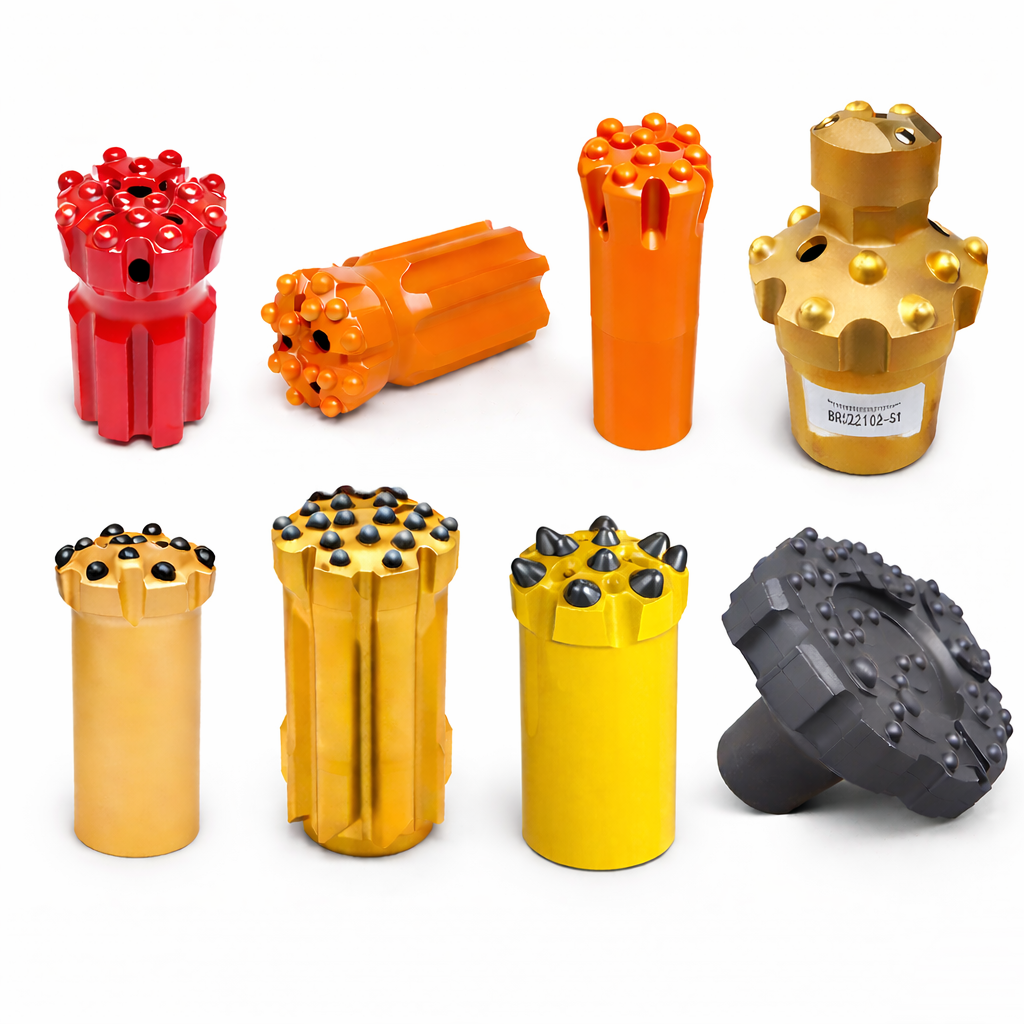
Carbide Button Bits
Best for: hard and medium rock at the lowest cost per foot – pick thread, diameter, button shape, and skirt.
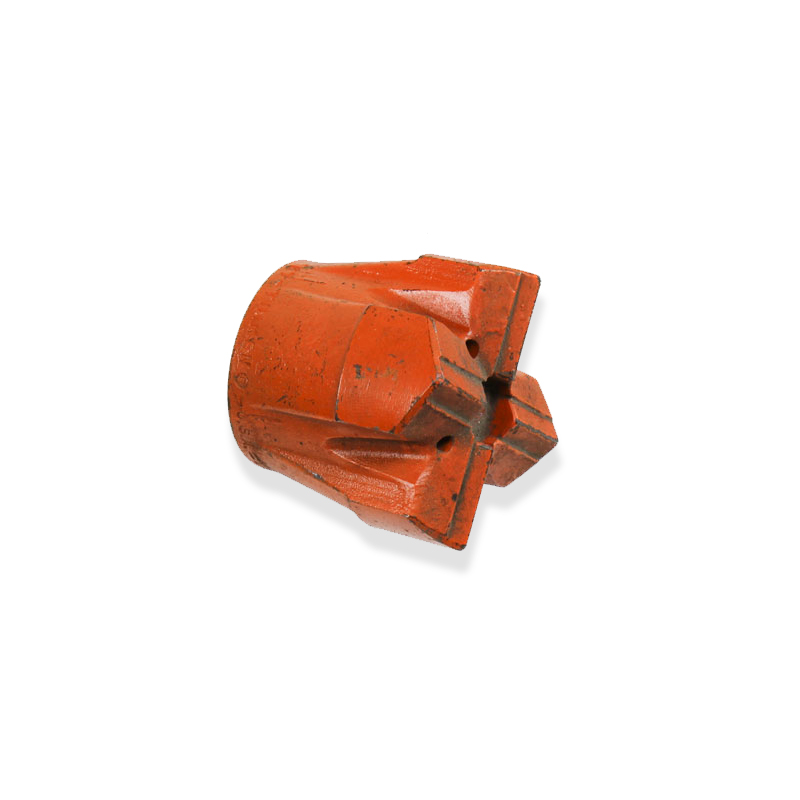
Carbide Tipped Cross Bit
Best for: broken ground, straight holes, and abuse – the bit that shrugs off what chips buttons.
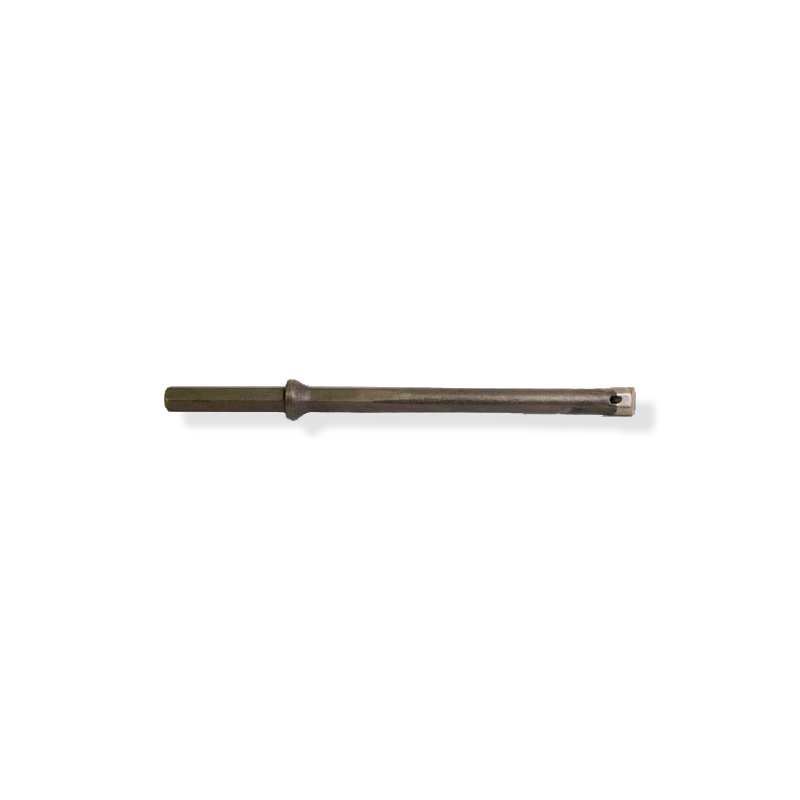
Whirlibit
Best for: dowels and anchors – bit and steel in one forging, nothing to assemble or loosen.
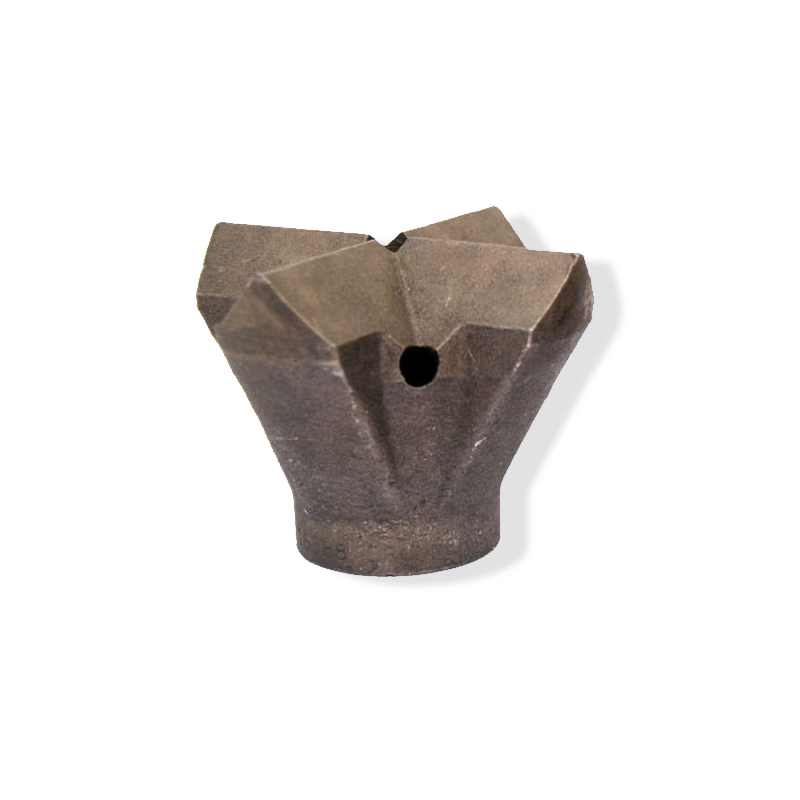
All Steel Cross Bit
Best for: soft limestone, sandstone, shale – the cheapest consumable in the category.
Threaded Reaming Button Bit
Best for: opening a pilot hole to full diameter on rope- and T-thread strings.
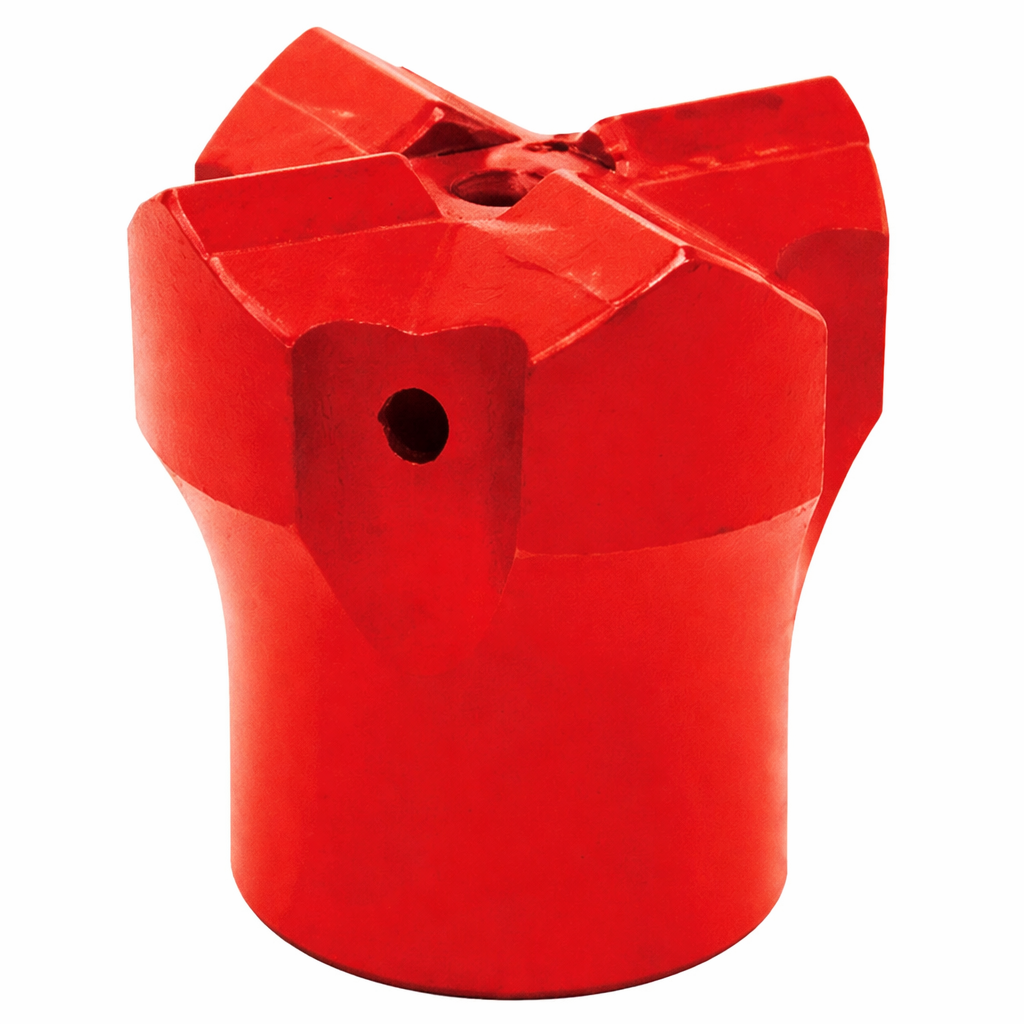
Imported Carbide Tipped Cross Bit
Best for: lighter duty where an imported cross bit keeps the entry price down.
More bit families in stock
Which Bit for Which Ground
The single highest-leverage choice on this page. When two options fit, cross tolerates abuse; button wins cost per foot in the right rock.
| Ground condition | First choice | Why |
|---|---|---|
| Hard, abrasive – granite, quartzite, basalt | Button bit, spherical | Longest life; ballistic tips would fracture |
| Medium, competent – most limestone, dolomite | Button bit, ballistic | Fastest cost per foot in medium, non-abrasive rock |
| Fissured, broken, or blocky rock | Cross bit, or retrac button | Blades bridge voids; retrac skirts escape collapsing ground |
| Soft – soft limestone, sandstone, shale | All-steel cross bit | Cheapest per foot; carbide is wasted money here |
| Sticky clay seams, wet fines | Cross bit or steel bit | Button faces smear and flushing ports plug |
| Overbreak / caving hole walls | Retrac button bit | Rear-facing edges ream backwards on retraction |
When a Bit Is Done
A dull bit is not saving money – it spends drill time, air, and steel life to avoid a bit purchase. Retire on any of these signals.
Wear flat past ~1/3 of the button
Penetration has already fallen; by two-thirds the bit drills 30%+ slower and worn buttons start breaking instead of wearing.
Snake-skin carbide
Polished buttons with fine surface cracks, from soft-rock or wet drilling. The cracks propagate and buttons shatter without warning.
Gauge ~30% under nominal
Measure across the gauge buttons with calipers. Undergauge means the next new bit jams in the hole this one cut.
Anti-taper or a broken button
Skirt steel flush behind the gauge row drags and jams; one chipped button sheds debris that destroys its neighbors.
Expertise, Stock, and a Driller on the Phone
Rock Drill Bit Questions, Answered Straight
Cross bit or button bit – which should I run?
What is the difference between ballistic and spherical buttons?
When should I replace a rock drill bit?
Can I run an H-thread bit on a rope- or T-thread rod?
Do you carry Timken or older H-thread bits?
Get the Right Bit Down the Hole
Every bit family in stock, and a driller on the phone who has run the ground you are drilling.
Configure a bitCall 1-888-883-5144