
Pick the Right Pneumatic Tamper or Sand Rammer, Matched to the Job
The only hand percussion tools that compact instead of break. This guide splits the two sub-families, matches the butt to the job, sizes your compressor, compares every model Crowder Supply stocks with verified specs and live prices, and builds the complete order – tool, spare faces, hose, and oiler – in one place.
Start with the job Talk to a tamper expertCategory Data Plate – Tampers & Rammers
Verified across all 13 models stocked – 2 sub-families, 4 brand lines
Start With the Job, Not the Catalog
A pneumatic tamper is a handheld air-powered percussion tool that drives a flat butt or pad against loose material to compact it – soil going back into a trench, or molding sand packed around a foundry pattern – instead of breaking it.
One question splits the whole category: are you compacting soil or packing sand? Then the space you are working in picks the face. Find your job below – each card jumps to the models that fit.
Trench backfill in lifts
Compacting soil and gravel back into utility trenches, a few inches at a time.
Beside utilities & footings
Compaction in narrow cuts, next to pipe, forms, and footings where a wide face will not fit.
Poles, posts & hydrants
Packing fill tight against round objects so they set plumb and stay put.
Bench molds & cores
Packing molding sand around patterns and cores at the foundry bench without marring them.
Deep flasks & floor molds
Reaching packing density at depth in floor molds, deep flasks, and refractory work.
The 5 Decisions, In Order
Pick the sub-family for the material, the butt for the space, confirm the compressor, size the blow, then let the options break the tie.
Soil or sand?
This one question splits the category.
Butt for the space
The tool supplies the blows; the face decides what they do.
Compressor check
All rated 90 psi at the tool inlet. Confirm CFM with headroom.
Stroke & blow weight
Longer stroke lands a heavier, slower blow. Soil wants heavy; sand wants fast.
Options & parts
Break ties on the ecosystem, then add oil and spare faces to the order.
How a Pneumatic Tamper Works
A pneumatic tamper is the simplest impact tool on the jobsite, and that is the whole point. Compressed air drives a free piston up and down inside a barrel, and the piston pounds a butt plate into the soil. The tool bounces on its own recoil; the operator only steers it.

Exploded view of a CP 0004 class tamper. Small hardware – o-rings, pins, jam nuts, lock clips, and plugs – is shown but left unlabeled.
The operating cycle
- Air enters and the throttle opensSqueezing the lever lifts the throttle valve off its seat. Line air, typically 90 psi, passes the inlet elbow and runs down the pipe extension toward the cylinder head.
- The cylinder head feeds the barrelAir is routed into the top of the cylinder above the piston. There is no separate valve chest here. The piston’s own position covers and uncovers the ports, so the piston is its own valve.
- The free piston drives downPressure above the piston accelerates it down the bore. It is not attached to anything. It flies freely, which is why the tool delivers a true impact blow rather than a push.
- The blow lands on the buttThe piston strikes the anvil face and the energy passes straight through the piston gland into the tamper butt, compacting the soil beneath it.
- Exhaust, recoil, and repeatThe piston uncovers the exhaust port, spent air dumps to atmosphere, and the rebound plus the returning air charge carries the piston back up to start the cycle again, several hundred times a minute.
What you are looking at
Backfill Tampers: The Three Ways to Buy
All six backfill tampers stocked appear in the full matrix below. These three cover the span of the class.
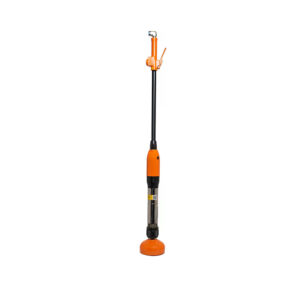
APT 131 Backfill Tamper
Best for: utility and construction crews – order it configured with the 6 in iron, 3 in solid, or pole butt at the same price. Built-in automatic oiler; dirt-tolerant flapper valve.
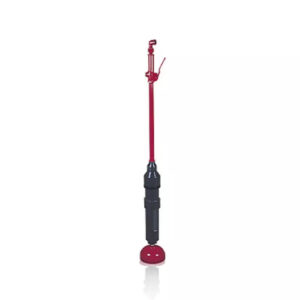
CP 0004 RV Backfill Tamper
Best for: deep lifts and heavy soils – the biggest bore in the class turns a 6 in stroke into the heaviest per-blow compaction carried, on just 28 CFM.
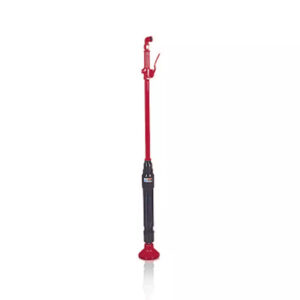
CP 0003 Backfill Tamper
Best for: crews without a tow-behind – at 18 CFM it is the lightest-drinking backfill tamper stocked, and the lightest to carry at 30 lb.
Sand & Bench Rammers: The Three Ways to Buy
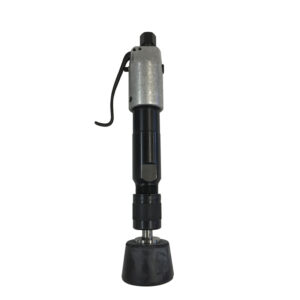
Texas Pneumatic TX8 Bench Rammer
Best for: shops that want one platform – 2-1/2 in for bench speed or 4 in for floor depth, with long-reach and non-revolving-piston versions of both.
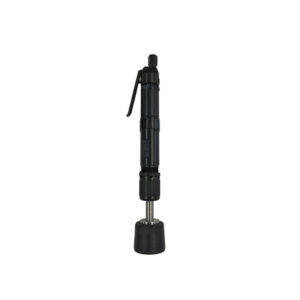
Texas Pneumatic TX70B Sand Rammer
Best for: delicate patterns – the fastest blow rate carried peppers sand into place without cratering it. NR and long-reach variants available.
Tamco/Toku 00BA Rammer
Best for: small cores and all-day handwork – the lightest tool in the category at an entry price, from the value line covering both sub-families.
Every Tamper & Rammer We Stock, One Table
| Model / configuration | Type | Butt / taper | Stroke | BPM | CFM @ 90 psi | Weight | Length | Air inlet | Price |
|---|---|---|---|---|---|---|---|---|---|
| Backfill tampers – compacting soil | |||||||||
| APT 131 (6 in / 3 in / pole butt) | Backfill | 6, 3, or pole | 5-1/2 in | 670 | 38-42 | 37 lb | 51-7/8 in | 1/2 F NPT | from $1,265 |
| CP 0003 | Backfill | 5 in | 6 in | 800 | 18 | 30 lb | 52 in | 1/2 NPT | $1,231 |
| CP 0035 | Backfill | 6 in | 5-1/2 in | 800 | 38.5 | 36 lb | 48-1/4 in | 1/2 NPT | $1,212 |
| CP 0004 RV | Backfill | 6-1/4 in | 6 in | 780 | 28 | 42 lb | 50 in | 1/2 NPT | $1,470 |
| Tamco/Toku Jet-06 | Backfill | 6 in | 5-1/2 in | 750 | 35.2 | 39.6 lb | 49 in | 1/2 NPT | $1,216 |
| Texas Pneumatic TX6TN | Backfill | 6 in | – | – | – | 40 lb | – | 1/2 NPT | $1,765 |
| Bench & sand rammers – packing molding sand | |||||||||
| Tamco/Toku 00BA | Bench | 1-3/4 in head, S taper | 2 in | 1,600 | – | 3.75 lb | 11-3/4 in | 3/8 NPT | $657 |
| TX70B (revolving) | Bench | .802 taper | 2 in | 2,500 | 15 | 6 lb | 16 in | 3/8 NPT | $855 |
| TX8 2-1/2 in | Bench | .802 taper | 2-1/2 in | 1,725 | 15 | 7 lb | 16-1/4 in | 1/2 NPT | $1,050 |
| More bench & sand rammer configurations | |||||||||
| Tamco/Toku 0BR | Bench | 2-1/2 in head, .802 | 2 in | 2,500 | – | 6.65 lb | 16-1/2 in | 1/4 NPT | $662 |
| Tamco/Toku 2BAR | Bench | 2-1/2 in head, .802 | 2-1/2 in | 1,725 | – | 7.125 lb | 15-1/4 in | 3/8 NPT | $754 |
| Tamco/Toku 1BA | Floor | 2-1/2 in head, .802 | 4 in | 1,240 | – | 10 lb | 20-1/4 in | 3/8 NPT | $963 |
| Texas Pneumatic TX00 | Bench | .401 taper | 2 in | 1,600 | 12 | 4 lb | 12 in | 1/4 NPT | $590 |
| TX70B NR | Bench | .802 taper | 2 in | 2,500 | 15 | 6 lb | 16 in | 3/8 NPT | $1,000 |
| TX70B NR + Long Reach | Bench | .802 taper | 2 in | 2,500 | 15 | 6 lb | – | 3/8 NPT | $1,265 |
| TX8 2-1/2 in NR | Bench | .802 taper | 2-1/2 in | 1,725 | 15 | 7 lb | 16-1/4 in | 1/2 NPT | $1,180 |
| TX8 2-1/2 in Long Reach | Bench | .802 taper | 2-1/2 in | 1,725 | 15 | 10 lb | 43 in | 1/2 NPT | $1,315 |
| TX8 4 in | Floor | .802 taper | 4 in | 1,240 | 15 | 10 lb | 21 in | 1/2 NPT | $1,300 |
| TX8 4 in Long Reach | Floor | .802 taper | 4 in | 1,240 | 15 | 10 lb | 48 in | 1/2 NPT | $1,650 |
One PO: The Trench-Ready Tamper Kit
Everything below is mechanically matched as a system around the APT 131: 1/2 in NPT air throughout, APT butt program faces, and lubrication handled at the hose. Add the defaults with one click or open any item to configure it without leaving the page.
The tamper
APT 131 – three butt options, built-in automatic oiler, dirt-tolerant flapper valve.
APT 131 w/ 6 in iron butt, 1/2 in female NPT inlet – the open-trench default
$1,265
The confined-space face
One face never fits every cut. The 3 in solid concentrates the blow beside pipe, forms, and footings.
APT 3 in round solid steel butt – fits the APT 131 lock-screw mount
$189.61
Hose whip + oiler
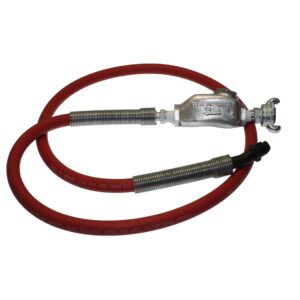
A 6 ft whip with a built-in 4 oz line oiler feeds the tool oil all shift – the number one life factor.
6 ft x 1/2 in whip, 4 oz line oiler, 1/2 in MPT bent swivel – matches the 131 inlet
$142
The safety cable
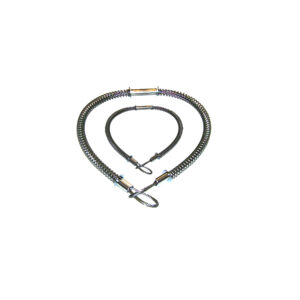
A whip check restrains the hose if a coupling lets go – cheap insurance on every air connection.
Whip check safety cable, small
$11
The spare face
Butts are the category’s consumable. A spare 6 in iron on the truck turns a wear-out into a 5-minute swap.
APT 6 in round iron replacement butt
$189.61
Built to Keep Your Tamper Working, Not Just Sell It
Tamper & Rammer Questions, Answered Straight
What size air compressor do I need to run a pneumatic tamper?
What is the difference between a backfill tamper and a sand rammer?
When should I use a pneumatic tamper instead of a plate compactor or gas rammer?
What oil does a pneumatic tamper take?
Why does my tamper feel weak?
Can I run a tamper sideways or overhead?
Which butt do I need for setting poles and hydrants?
Compact It Right the First Time
Thin lifts, the right face, 90 psi at the tool, and oil every two hours – the rest is picking the model. Shop the category with free shipping, or call and we will spec the tool, the butt, and the compressor together.
Shop tampers & rammers Call 1-888-883-5144