
Crowder Supply · Buyer’s Guide
Hit Harder Per Pound With the Right Rivet Buster
Rivet busters are the light-heavyweights of demolition — breaker-class blows from a tool you can hold horizontally. This guide walks the five decisions that pick one — stroke length, air supply, handle style, tool steel, and the oil-and-air kit — then shows the best model at each stroke with live pricing and a one-PO starter kit.
Start With the Job, Not the Catalog
A rivet buster is a handheld pneumatic demolition tool that drives a free-flying piston through a 6 to 11 inch stroke to hammer interchangeable chisels, punches, and moil points — breaker-class hitting power from a 24 to 39 lb tool you can hold horizontally.
Bridge deck repair
Horizontal + elevated demo
Tank + plate cutting
Rivet + bolt removal
Breaking floors all day?
The 5 Decisions, In Order
Work them top to bottom and the model almost picks itself. Stroke sets the blow, your compressor has to feed it, the handle fits the posture, and the last two keep it hitting.
Stroke length
The defining spec. Longer stroke = heavier single blow at a lower rate.
| 6 in | Rivets, lighter concrete, tight access – CP 4160 |
| 8 in | Bread-and-butter deck and demo stroke – CP 4608 |
| 9 in | Toku jumbo — long stroke on 36 CFM |
| 11 in | Max force for thick, reinforced work – APT 1133 |
Air supply
Beat the tool’s CFM with headroom at 90 psi at the tool.
| 33-36 | Toku RB-110 / RB-91HP, small compressors |
| 42-46 | APT 633/133, TX 6-8 in, CP, TEX 14 |
| 48-50 | APT 1133, TX13311 long-stroke |
| Hose | 3/4 in ID; whip hose at the tool |
Handle style
Pick for the posture of the work, not the catalog photo.
| D-handle | Inside trigger, the general demo grip – CP 4608 D |
| Open grip | Outside trigger — underdeck visibility – TX1338 OT |
| T-handle | Downward floor work, upright posture – APT 133 T |
Steel + retention
Every buster here runs jumbo 11X steel — CP’s .890 x 1.125 in taper is the same 11X shank.
| 11X | Narrow, side-cut, moil, ripper, punch, blank |
| Nose | Sleeves + bumper + retainer with lock spring |
| Rule | Never run without the retainer in place |
Oil + air kit
Lubrication is the number one life factor on a buster.
| Oiler | In-line on the whip, rock drill oil |
| Whip | 6 ft whip hose absorbs vibration |
| Spares | Retainer spring + bumper in the box |
Crowder Supply – Product Knowledge
How a Rivet Buster Works
A rivet buster shares its cycle with a chipping hammer — a free-flying piston, driven by compressed air, hammering the back of a chisel — but everything around the cycle is heavier, and the nose that holds the steel is a positive mechanical lock rather than a spring. That is what lets it shear rivets, cut plate, and break structural concrete.

Exploded view of a CP 4611 D rivet buster, labeled by function. Fasteners, seals, and pins are omitted for clarity.
The operating cycle
- Air enters at the inletSqueezing the throttle lever opens the throttle valve. Compressed air passes the air-inlet bushing and runs down the throttle tube into the tool.
- The valve case ports the airA single free valve inside the valve case has no linkage and no timing gear. Pressure alone flips it, sending air alternately behind and ahead of the piston.
- The piston accelerates down the cylinderThe piston is connected to nothing. All of its mass and velocity arrive at the far end as impact energy rather than as a steady push.
- The piston strikes the tool shankIts face hits the anvil end of the chisel or cutter. The shank is guided by the upper and lower sleeves and held in the nose by the retainer, lock collar, and lock spring.
- Exhaust, then returnAs the piston clears the exhaust ports, pressure shifts, the valve flips, and air drives the piston back for the next blow. Spent air leaves through the exhaust deflector, away from the operator.
What you are looking at
The Best Buster at Each Stroke
Five picks spanning the stroke ladder, chosen on the site’s own spec tables for weight, impact rate, and air draw. Prices are live from the store; each links to the full configurator.
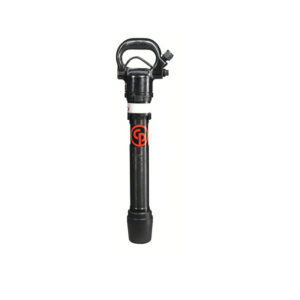

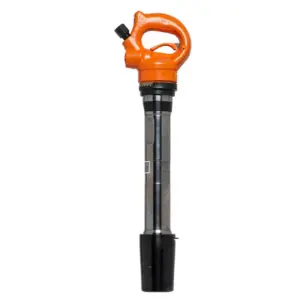
Need the Made-in-USA Tamco RB-133 or the Wizard RB-185D? See the full rivet buster category.
Full Spec Matrix
The five featured busters side by side. Hit the plus below to expand every rivet buster Crowder Supply carries. Every figure is from the model’s own spec table on crowdersupply.com; dashes mean the maker does not publish that figure.
| Model | Handles | Stroke | Weight | Impact BPM | Air CFM | Inlet |
|---|---|---|---|---|---|---|
| CP 4160 | D, pistol | 6 in | 24-25 lb | 1,100 | 44 | 1/2 F NPT |
| CP 4608 | D, pistol | 8 in | 30-31 lb | 1,080 | 45 | 1/2 F NPT |
| TX1338 | D, open grip | 8 in | 30.7 lb | 960 | 44 | 1/2 F NPT |
| APT 1133 | D, pistol, T | 11 in | 33-39 lb | 850 | 48 | 3/8-1/2 NPT |
| Toku RB-110 | D, pistol | 11 in | 35 lb | 680 | 33 | 3/8 F NPT |
| More 6 and 8 in stroke | ||||||
| APT 633 | D, pistol | 6 in | 28 lb | 1,100 | 42 | 1/2 F NPT |
| TX1336 | D, open grip | 6 in | 28.9 lb | 1,100 | 44 | 1/2 F NPT |
| APT 133 | D, pistol, T | 8 in | 30-36 lb | 1,140 | 42-46 | 3/8-1/2 NPT |
| Atlas Copco TEX 14 | D | 8 in | 31 lb | 900 | 44 | 1/2 F NPT |
| Tamco RB-133 (USA) | D | 8 in | 30 lb or under | – | – | – |
| TX1338 (tool only) | D | 8 in | 30.7 lb | 960 | 44 | 1/2 F NPT |
| TX133 8 in OT (tool only) | Open grip | 8 in | 30.7 lb | 960 | 44 | 1/2 F NPT |
| More 9 and 11 in stroke | ||||||
| Toku RB-91HP | D, pistol | 9 in | 32 lb | 700 | 36 | 3/8 F NPT |
| CP 4611 | D, pistol | 11 in | 33-34 lb | 720 | 45 | 1/2 F NPT |
| TX13311 | D, open grip | 11 in | 33.5 lb | 850 | 50 | 1/2 F NPT |
| Specialty | ||||||
| Wizard hybrid (TK-RB185D) | D | 4 in | – | 1,500 | – | – |
The Complete Order, One PO
Everything to put an APT 133 to work on day one — buster, steel, air line, oil, and a spare retention spring — every item matched to the 11X jumbo shank and 1/2 in NPT inlet. Change any option before adding.
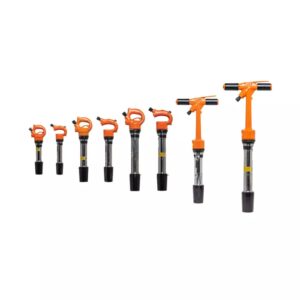
APT 133 buster
$1,648
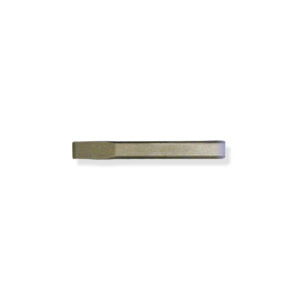
Steel starter pair
$62
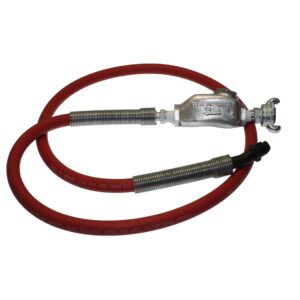
Whip hose + oiler
$142
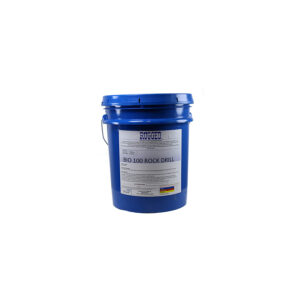
The oil
$42

Spare retention
$5
Rivet Buster FAQ
What size air compressor does a rivet buster need?
Plan on 33 to 50 CFM at 90 psi, depending on the model – the Toku RB-110 draws 33 CFM while the TX13311 draws 50. Your compressor must deliver the tool’s rated CFM with headroom, at 90 psi measured at the tool, through a 3/4 in ID hose (1/2 in is the bare minimum). Undersized air shows up as weak, slow blows long before the tool complains any other way.
What is the difference between a rivet buster and a chipping hammer?
Stroke and retention. A rivet buster runs a 6 to 11 inch piston stroke – two to five times a chipping hammer‘s 1 to 4 inches – so each blow arrives far heavier, and its nose locks the steel in with a retainer instead of a spring. Chipping hammers (8-22 lb) suit surface chipping and scaling; rivet busters (24-39 lb) shear rivets, cut tanks, and break structural concrete. For heavy downward slab work, step up again to a paving breaker. For further information, visit our choosing a concrete breaking tool page.
What stroke length should I choose?
Match the stroke to the material: 6 in for rivet cutting, lighter concrete, and tight access; 8 in for general bridge-deck and demolition duty – the most-specified stroke; 11 in for thick, reinforced sections needing maximum force per blow (Toku’s 9 in jumbo gives long-stroke hitting on only 36 CFM). If a tool is not through the section in 10 to 20 seconds of steady work, you need more stroke.
What tool steel do rivet busters take?
Jumbo 11X shank steel across the whole lineup – narrow chisels, side-cut chisels, moil points, rippers, backout punches, and blanks all interchange. The .890 x 1.125 in tapered shank listed on the CP 4608 and CP 4611 is the same 11X jumbo shank, so one steel shelf serves every buster Crowder stocks. Wide-blade and 24 in-plus steels need the lower split bushing.
Can I use a rivet buster overhead?
No – a rivet buster is the wrong tool for overhead work. The long-stroke blow and 24-39 lb weight are meant to be driven down or held horizontally against the work. For overhead and vertical-up chipping, use a light chipping hammer sized for the job. Rivet busters shine precisely where breakers fail: horizontal, elevated, and under-deck work at or below chest height.
Do people still use rivet busters on actual rivets?
Yes. Cutting and driving rivets on historic bridges, railcars, and tanks is still the tool’s namesake job – a 6 in buster with a backout punch shears the head and drives the shank in seconds. But most rivet busters sold today earn their keep as the light-heavyweight of concrete demolition: bridge-deck repair, tank cutting, and elevated work where a 60-90 lb paving breaker cannot go.
Ready to hit harder per pound?
Every stroke in stock with free shipping on all rivet busters, one 11X steel shelf that fits the whole lineup, and a specialist a phone call away to size it right the first time.
